Learn English with Rosetta Stone
GET STARTEDEnglish is everywhere — in airports, job applications, menus, films, and conversations across the globe. It’s often the first step towards new experiences, new opportunities, and greater independence.
Whether you’re learning for your career, education, or everyday life, you can start building real communication skills right away. You don’t have to be perfect — you just have to begin. With the right tools, progress comes faster than you think.
Why learn English?
English is spoken by more than 1.5 billion people worldwide, and it provides a widely recognised standard in education, business, and media. Learning it unlocks opportunities, helps you communicate with people from across the world, and strengthens your understanding of other English varieties.
Whether you’re applying for a job, studying abroad, or meeting new people, English gives you the tools to participate fully and confidently.
Top reasons to learn English
- Speak with the world: English is spoken in over 100 countries and across every continent.
- Travel smarter: From airports to restaurants, English is often the go-to language in international settings.
- Grow your career: Many global companies require or prefer English proficiency.
- Access global culture: Understand literature, news, music, and TV in their original form.
- Learn for life: Mastering English boosts memory, confidence, and communication skills.
English language basics
Where is English spoken?
English is spoken by more than 1.5 billion people worldwide — either as a native, second, or foreign language. It’s the official language in countries like the United Kingdom, Ireland, Australia, New Zealand, and Canada, and it’s commonly used in global business, travel, and education.
How long does it take to learn English?
It depends on your goals, but daily, consistent practice makes a big difference. Even short sessions (10–15 minutes a day) can lead to steady improvement. You’ll likely understand and speak basic English within a few weeks, especially with Rosetta Stone.

English proficiency: from beginner to advanced
Beginner
Focus on pronunciation and essential grammar:
Start with common greetings and practical phrases: Hello, Hi
Learn essential verbs like to be, to have, to want
Talk about people, places, and routines
Intermediate
Build on the basics:
Use present, past, and future tenses
Understand directions, menus, and everyday situations
Hold short conversations and write simple messages
Advanced
Approach fluency by refining skills:
Use complex grammar and varied sentence structures
Express emotions, opinions, and abstract ideas
Read books, follow the news, and watch films
Learn English with Rosetta Stone
Rosetta Stone’s award-winning program is built to get you speaking naturally and confidently:
Real-world speaking practice
Voice recognition helps fine-tune your pronunciation.
Clear grammar support
Learn structure without memorising endless rules.
Smart review
Spaced repetition reinforces what you’ve learned.
Cultural insights
Understand how English is used around the world.

Core English skills
Pronunciation tips
English pronunciation varies across regions:
Multiple sounds for letters:
Some letters sound different depending on context — for example, the “a” in cat vs. cake, or the “o“ in hop vs hope.
Word stress matters:
Stress can change meaning. For example, PREsent (noun) vs. preSENT (verb).
Silent letters:
Many words include letters that are not pronounced, such as the “k” in knight.
Vowel sounds:
Some vowel sounds differ from other varieties of English, e.g., bath → bahth, lot → closer to lawt.
Regional variation:
Accents vary widely — even within the UK, vowel sounds, rhythm, and intonation differ. Listening to clear standard pronunciation first helps build confidence.
Practice listening and repeating:
Regularly listening to native speakers — via media, podcasts, or audiobooks — helps tune your ear and improve pronunciation naturally.

Vocabulary and origins
English has borrowed words from many languages, including Latin, French, and German, which means you may already recognise words like hotel, piano, or restaurant. Understanding these roots helps you spot patterns and learn faster.
Useful phrases
Hello
HelloHow are you?
How are you?Thank you
Thank youNice to meet you
Nice to meet youCan you help me?
Can you help me?
English verbs
English verbs change for tense and subject. For example: I go, he goes, we went, they will go. Regular practice helps these patterns become second nature.
Nouns and articles
English uses the articles a, an, and the, and nouns can be singular or plural (dog / dogs). Some rules have exceptions, but consistent exposure helps.
How to learn English
Online:
Study anytime with Rosetta Stone on desktop or mobile. Sign up now!
- Classroom learning: Structured group practice for steady progress.
Private tutoring:
Get 1-on-1 support tailored to your goals. The best source for English tutors is Wyzant.
- Language exchange: Practice speaking with fluent or native speakers.
- Immersion: Live, work, or travel in an English-speaking region to boost fluency.
Media and tools to support learning
Dictionaries & tools:
Use Vocabulary.com, Dictionary.com, or Thesaurus.com to look up definitions, hear pronunciations, and expand your word knowledge.
- Books: Start with children’s books or adapted short stories.
- Music & podcasts: Listen to English songs or learner-friendly podcasts.
- TV & films: Watch with English subtitles to improve comprehension and vocabulary.
Quick assessments:
Take short speaking or writing tests with Emmersion to measure your progress over time.
Take the first step
Rosetta Stone offers a free first lesson so you can start right away. Whether you're learning English for work, school, travel, or personal growth — Rosetta Stone will guide you every step of the way.
GET STARTEDWhat’s included with your subscription

All-access subscription
Access to all 25 of our languages
Immersive lessons
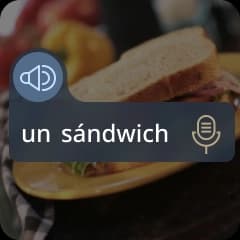
Master your new language with immersive lessons and our TruAccent speech tool

Chat Missions
Fun, realistic conversation practice with Chat Missions

Flashcards
500+ flashcard sets to learn the words you care about

Sapphire Studio
Create your own learning materials on any topic in Sapphire Studio
What our customers are saying

I absolutely love the approach that Rosetta Stone utilizes. It feels like a natural and fun way to learn a new language. I also appreciate that I’m able to squeeze lessons in when I only have 10 minutes… and it’s a more productive and enjoyable activity than getting sucked into online scrolling just to distract myself. Why not learn a new language instead?
― Turner
I have been using Rosetta Stone for over 30 years. By far, this is the best application for language learning. There are no language crutches, only immersion. You learn in a natural way and move forward quickly. Apps with games are fun, but you learn more slowly, and you are always “translating,” not immersing. Rosetta Stone makes language learning interesting and efficient.
― GrahamAbout Learning English with Rosetta Stone
On Rosetta Stone, learners can build confidence in British English through interactive lessons designed to develop speaking, listening, reading, and writing skills. The website offers pronunciation practice that guides learners in mastering UK accents, along with vocabulary-building tools and practical exercises that reinforce daily communication. Live tutoring sessions provide personalized feedback, helping learners focus on challenging areas while gaining fluency at their own pace. Every lesson is structured to support gradual, measurable progress while keeping the experience engaging and accessible.
Learning English the British way emphasizes practical language use, clear communication, and exposure to authentic vocabulary and expressions. Resources include structured exercises, interactive games, and listening activities that reflect real-life British speech patterns. Learners of all ages and levels can engage with materials that range from beginner-friendly phrases to more advanced sentence structures, fostering confidence and comprehension. The focus is on building skills that are directly useful for conversations, professional settings, or academic environments, rather than memorizing rules in isolation.
Learners can apply these tools both at home and while traveling, making daily practice achievable and meaningful. Completing lessons on the website, practicing pronunciation with audio feedback, or reviewing vocabulary in short, consistent sessions strengthens retention and fluency. Learners can simulate real conversations through interactive exercises, preparing them for authentic situations such as ordering food, attending meetings, or socializing in the UK. By combining structured practice with real-world application, learners steadily improve their British English in ways that are practical, confident, and rewarding.